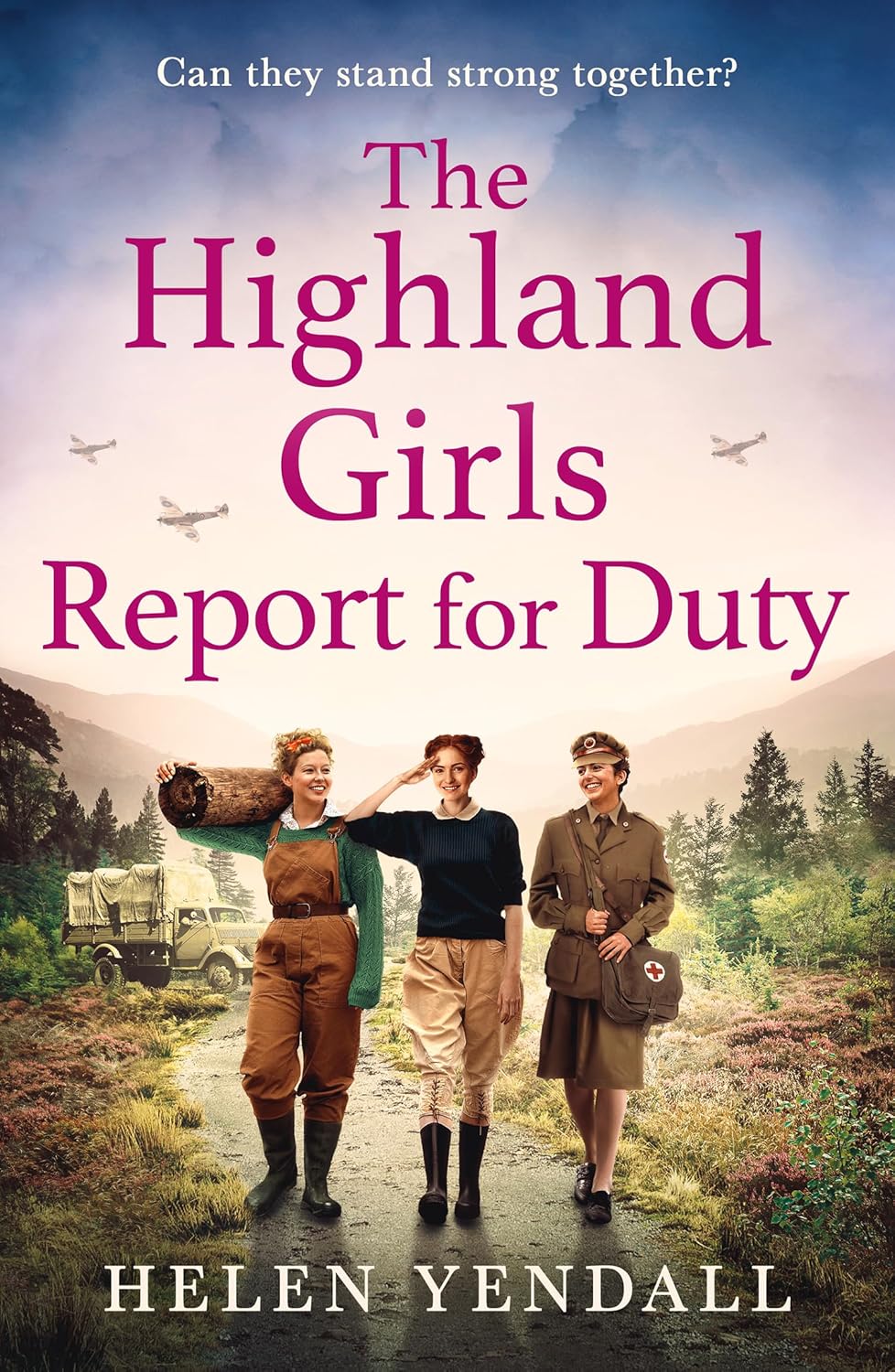
Helen Yendall, author of The Highland Girls Report For Duty set in WW2 returns to my blog this week to talk about the background research for her novels and how sometimes she gets it right and sometimes she gets it wrong. Over to Helen for a fascinating insight …
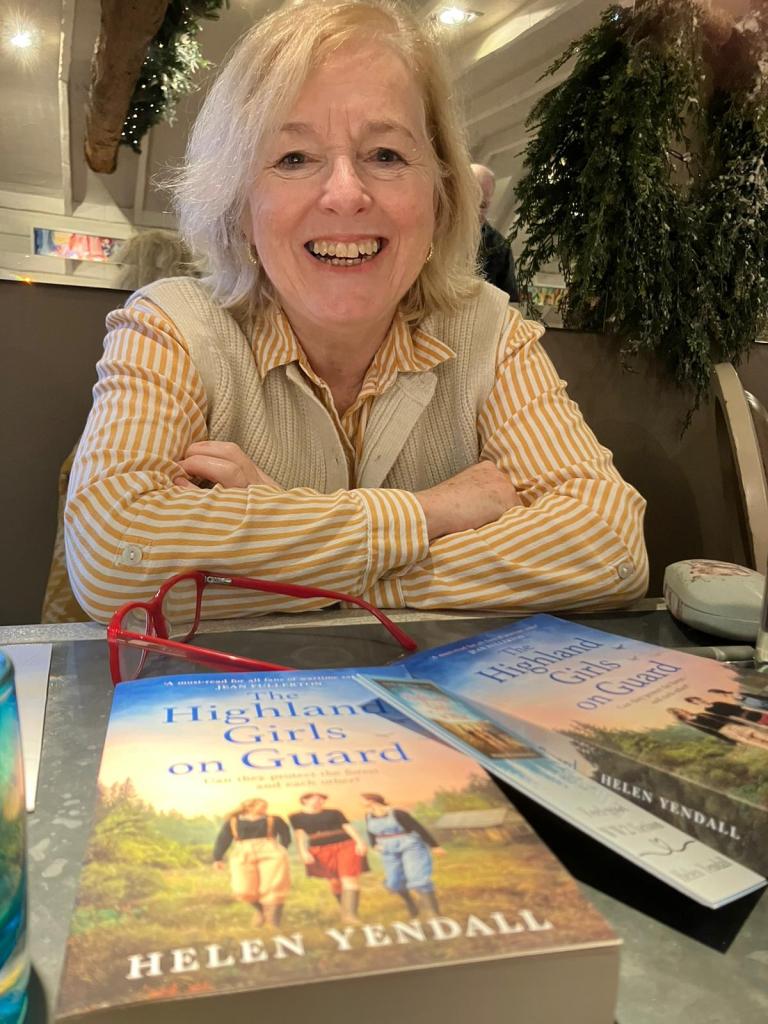
It’s great to be back on Morton’s blog (last time was 2022!). Thank you for having me, Morton.
As a writer of historical fiction, I do a lot of research and it’s definitely a double-edged sword: on the downside, it’s time-consuming and the perfect excuse to procrastinate but on the plus side, it can be fascinating and research has given me some great ideas for my plots.
Here are a few examples of when I got it oh-so wrong and other times when it all came together beautifully!
‘It’s only fiction. Just make it up!’ some might say, but I think most writers want to get their facts right.
We want readers to be convinced by the imaginary world we’ve created and getting a date wrong or having a character say something that wasn’t in common parlance for another fifty years, can break the spell. If a reader notices a gaffe, they’re immediately pulled out of the story and you’ve lost their trust.
Also, if you make a blooper, someone is bound to point it out (usually with great glee) because we all like to be right, right?
Actually, I made an error in one of my books set in 1944 which no one (so far!) has mentioned, so I’m going to own up to it now.
In ‘The Highland Girls Report for Duty’, one of my female characters thinks that a male character might be disappointed when he sees her because, “In his mind’s eye, she’d probably been a cross between Marilyn Monroe and Lana Turner.”
Lana Turner is OK – she was a big star in 1944 – but Marilyn Monroe? Ahem. At that time, she was working in a munitions factory and didn’t sign her first studio contract or use the name Marilyn Monroe until 1946, so that’s definitely an anachronism. Whoops.
And I remember now that I put Marilyn Monroe into the manuscript as a placeholder, meaning to check and if necessary, replace her, later. And then, I forgot.
The mistake wasn’t picked up by an editor, either. And on that subject, I think many people assume that an editor checks your book from beginning to end but (sadly!), in my experience, that’s not true.
My copy editor has, in the past, pointed out the odd phrase I’ve used that wouldn’t have been used in 1940s Britain, for example but on the whole, they expect you to do your own fact-checking. The buck definitely stops with you.
But even the big names with – presumably – the best editors – get things wrong. Richard Osman made a mistake in his 2020 novel The Thursday Murder Club when he wrote about a character parking outside a Waitrose cafe in Tunbridge Wells and, you’ve guessed it, there is no Waitrose in Tunbridge Wells. (Residents were apparently “furious”, although whether they were furious about the mistake in the book or the fact that they don’t have a Waitrose, I can’t say).
Neither Osman nor his publisher bothered to check because they assumed an affluent place like Tunbridge Wells would have a Waitrose.
Never assume! It’s very easy to assume and not check. I have done it myself!
In the first of my lumberjills books, ‘The Highland Girls at War’, there’s a scene set at a village fete and I describe two flags flying at the entrance: the Scottish Saltire and the Canadian Maple Leaf flag.
Unbeknown to me (and it was something I didn’t even think I had to check!) the Canadian Maple Leaf flag wasn’t actually used until 1965. During WW2, when my book is set, the Canadian Red Ensign served as Canada’s wartime flag.
Fortunately, fellow author and friend, Jane Bettany, read the book when it had only got as far as Netgalley (an online platform where advance readers can review books before they are published) and she very gently and tactfully pointed out that I *might* have made an error with the Canadian flag (I had!), which meant there was time to change it before the book was published and which saved me a very red face!
Research can also be very frustrating. Sometimes you simply won’t be able to find something out and you can spend hours and end up no further forward. This happened to me when I was writing my debut novel, ‘A Wartime Secret’.
I discovered that many adult Jews were smuggled into Britain during WW2 but I couldn’t find out how this was done. So, although it features in my story, I had to be non-specific about it and let the reader imagine contacts and underground organisations for themselves.
It’s always worth asking yourself whether what you’re trying to find out is absolutely essential to the story, or if you can get round it in some way. Sometimes, being vague is, I think, better than putting in lots of detail that you’re not 100% sure about.
But research is not only about avoiding mistakes. It can also help with plot!
When I started writing the first in what would become a series about the Women’s Timber Corps (WTC) during WW2, I quickly discovered that in Scotland, the women worked alongside thousands of lumberjacks of the CFC (Canadian Forestry Corps), who had answered Britain’s call for help (as they had also done during WW1).
It was a gift to me as a writer and I had no hesitation in setting my stories in the Highlands, so that I could include lots of Canadian lumberjacks, to provide the love interest. There were conscientious objectors and Italian prisoners-of-war working in the forests too and they appear in later books.
And sometimes, rather than wrestling with the facts and wishing you could bend them to suit your story, something rather serendipitous happens.
In my latest – as yet, untitled – novel, which is set in 1950s Sussex, I need a character to pick some forget-me-nots from a verge at the side of the road.
It can’t be any other wild flower, only forget-me-nots will do but that scene in the book takes place in mid-March 1957 and even in the South of England, that would be too early for forget-me-nots, which typically bloom from April onwards.
I knew that if I put them in the book, at that time, someone would take great delight in pointing out my error! And my own pride wouldn’t let me do it, in any case.
I was contemplating having to re-jig the whole time line of the book – which would be quite an undertaking – but then, I thought, what if there was a very warm or early spring that year? Might that have made a difference?
So, I looked up UK weather in March 1957 and discovered that it was the warmest March on record (in fact, it turned out to be the warmest British March of the twentieth century!), featuring “an exceptional mid-month heatwave” with temperatures reaching up to 23.3°C. This prolonged spring warmth “triggered widespread early spring rushes in nature, causing many classic April-blooming plants to push forward early.”
So, when the book is published, if anyone queries my March forget-me-nots, I shall politely tell them to stick that in their pipe and smoke it!
About Helen Yendall
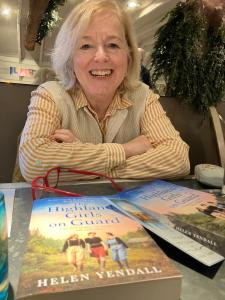
Helen Yendall writes heart-warming women’s historical fiction.
Her debut, ‘A Wartime Secret’ was inspired by the true story of a bank that moved to the countryside for the duration of WW2.
Next, she wrote a 3-book series about the feisty gals of the Women’s Timber Corps (the ‘lumberjills’) who worked in Britain’s forests during and after WW2.
She’s currently working on an exciting new project: a standalone novel set in 1950s Britain and due for release in March 2027.
Helen’s a member of the Romantic Novelists’ Association and when she’s not writing, she likes playing tennis, swimming reading and walking her dog Bonnie in the Cotswold countryside, where she lives.
Social Media and Website links
Keep in touch with Helen on the following links:-
Instagram: @Helenyendall23
I blog at: www.blogaboutwriting.wordpress.com
More About The Highland Girls Report For Duty
My last book was ‘The Highland Girls Report For Duty’, the third and final book in the Highland Girls series. Best read after the first two, of course but it can be read as a standalone.
Scotland, 1944
Fearless Seffy was hoping for a transfer to England to be near Callum, the Canadian soldier she has given her heart to. Instead, she is instructed to train a new group of lumberjills. Will their unhelpful attitude finally be a match for Seffy’s determination and cheerfulness?
Sensible Jean is a true believer in the wartime effort. When she meets a conscientious objector can she accept that following the rules might not always define a person?
And young Missy has come all the way over from Canada to surprise her first love, Callum who is stationed as a soldier in England. But despite this grand act of love, his heart may no longer belong to her…
The Women’s Timber Corps are about to have a tumultuous year…
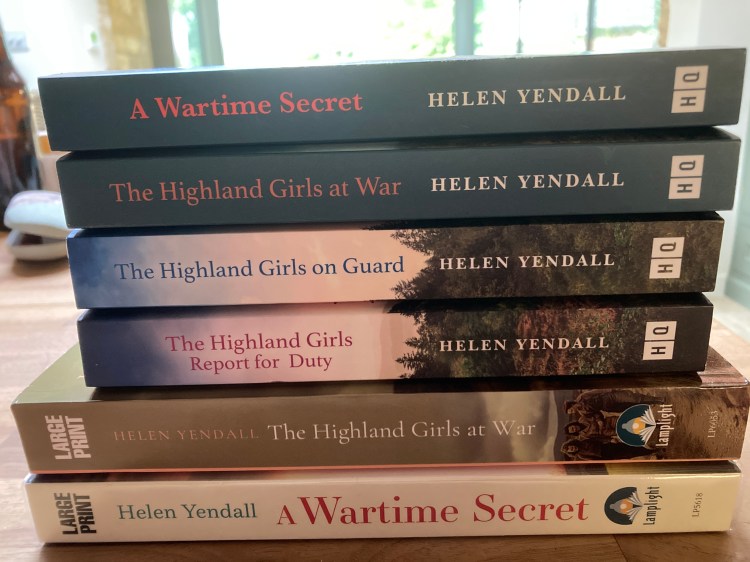
Helen’s books are available in all formats, buying links below:-
This is the blog for Morton S. Gray, writer of romance with a mystery to solve The Secrets of Borteen Bay Series set in the fictional seaside town of Borteen for Choc Lit Publishing an imprint of Joffe Books.
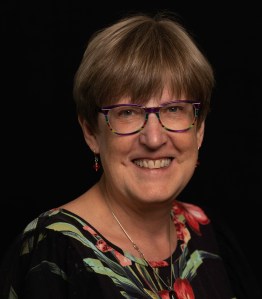
Thank you for reading my blog – you can sign up to receive these posts automatically below.
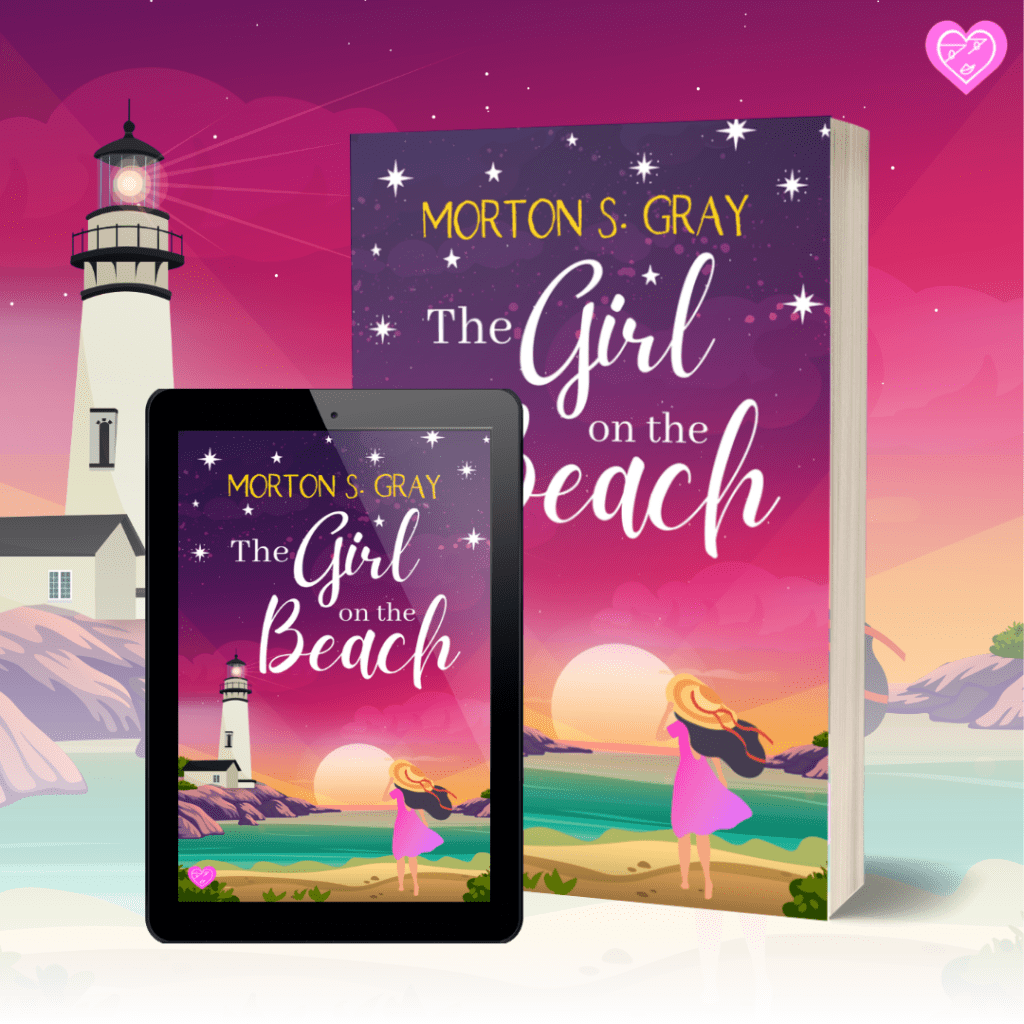



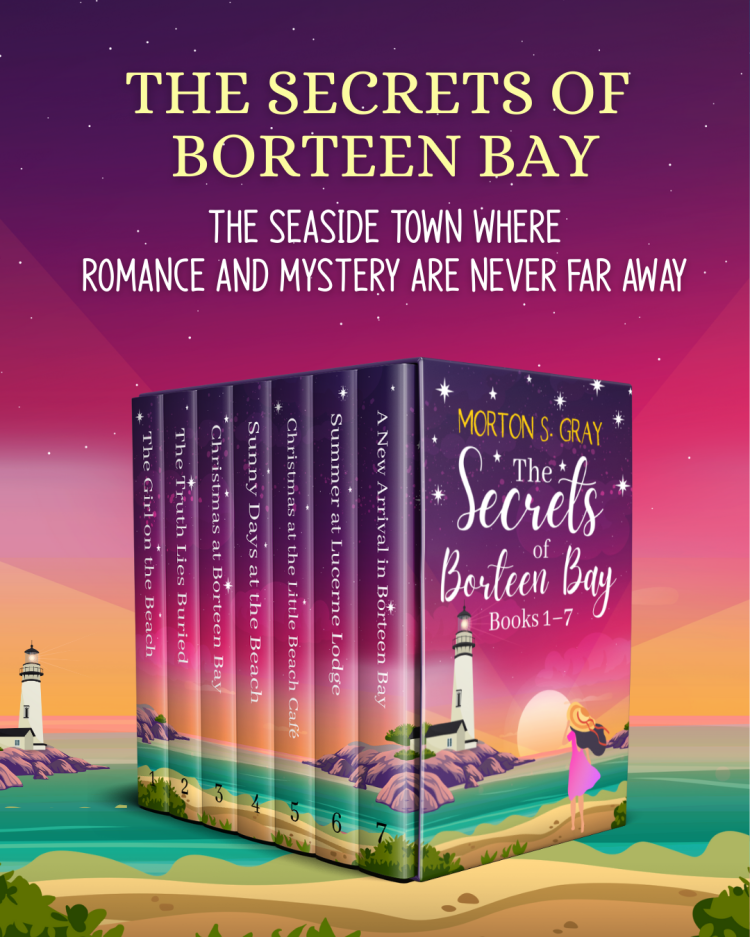
The Secrets of Borteen Bay Series – Buying link here